
LADS Africa graduates from incubation to independence, embodying the transformative promise of Zimbabwe’s Education 5.0 vision
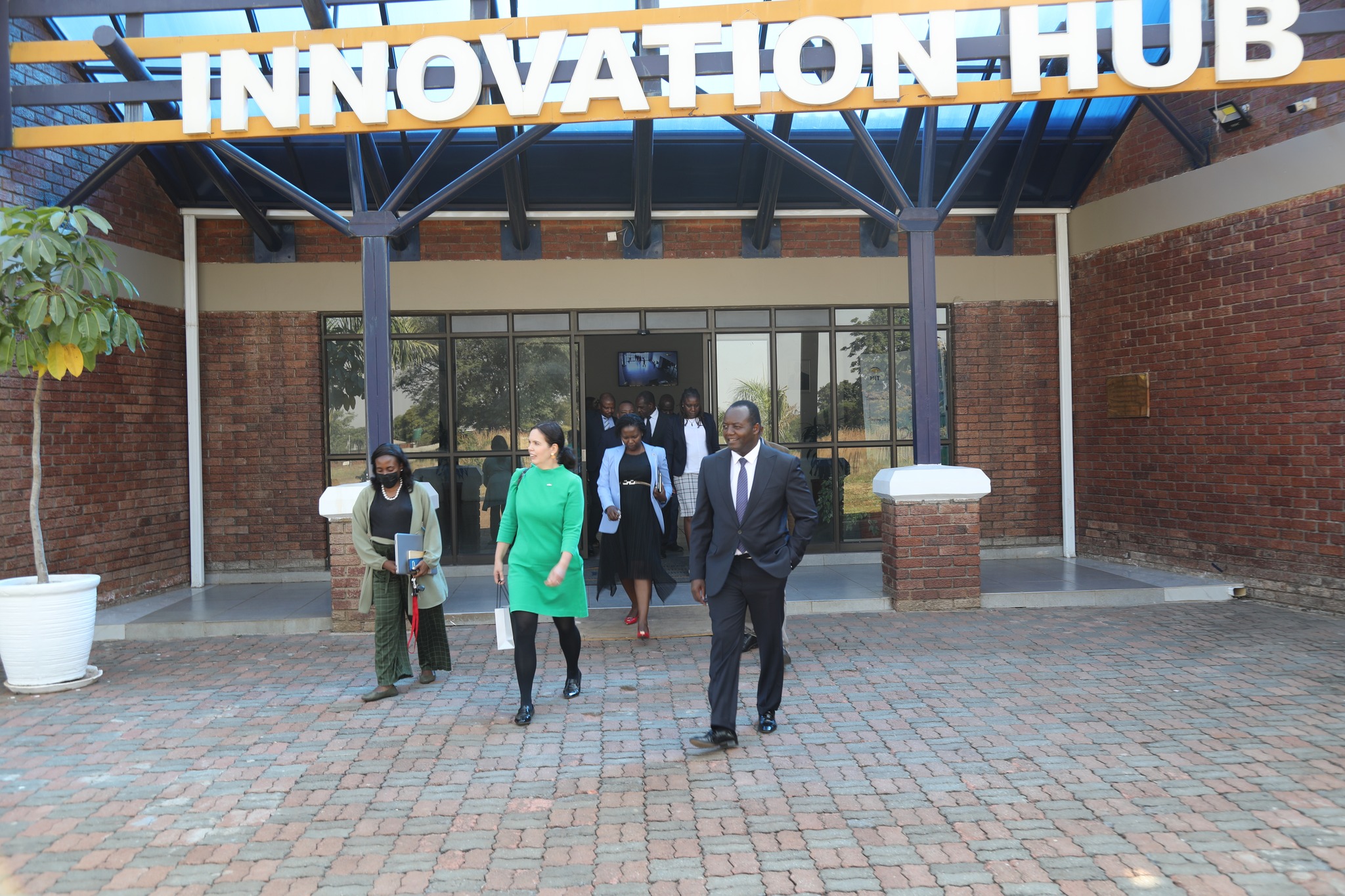
There is a particular moment in the life of every promising start-up when the scaffolding must come down, when the support structures that helped it stand must be removed, not because they failed, but because they succeeded. For LADS Africa, that moment arrived this year as [U1] the company stepped out of the Harare Institute of Technology Innovation Hub and into its own premises, a fully-fledged technology enterprise ready to take on Africa.
The graduation is not merely a change of address. It is the culmination of a journey that began with a single, urgent question: why were Zimbabwe’s local authorities still drowning in paper-based processes, bleeding revenue through leakages, and depending on imported software systems that neither understood nor served their needs? The answer that emerged from HIT’s Innovation Hub was LADS, the Local Authorities Database System, and it has since quietly rewritten the rules of municipal governance across the country.
Built in Zimbabwe, Built for Zimbabwe
For years, local authorities across Zimbabwe faced a shared crisis of governance infrastructure. Most were running on imported systems, South African platforms designed for South African realities, accounting tools never meant to carry the complexity of a Zimbabwean municipality. The costs were staggering: annual licensing fees ranging from US$5,000 to US$150,000 for some big cities, [U2] payable in scarce foreign currency, for software that could not be customised to comply with the Ministry of Local Government’s reporting requirements, let alone adapted when something broke.
The consequences were systemic. Departments within the same council maintained separate, contradictory records, with one office listing the owner of a property while another had already reallocated it. Financial reports fell years behind. Audits stalled. Revenue collection was manual, opaque, and easily manipulated. Councils that were supposed to be engines of local development were instead struggling to account for what they had.
It was into this crisis that LADS Africa was born, incubated within the fertile intellectual environment of the HIT Innovation Hub. The system its founders envisioned was not a patch on existing problems but a comprehensive home-grown Enterprise Resource Planning (ERP) platform built specifically for Zimbabwean local authorities, one that could automate financial management, land administration, engineering services, social services, and property oversight, all from a single integrated platform, and all in compliance with local regulatory frameworks.
A Hub That Does What It Promises
The HIT Innovation Hub exists to do precisely what its name suggests: to take raw ideas and give them the conditions they need to become real. Under the framework of Zimbabwe’s Education 5.0 philosophy, which mandates that universities teach, research, serve communities, innovate, and industrialise, HIT has committed itself to being more than an academic institution. It is a technology incubator, a commercialisation engine, and a pipeline for Zimbabwe’s industrialisation aspirations.
For LADS Africa, the Hub provided far more than a desk and a Wi-Fi connection. It offered mentorship from experienced engineers and business strategists, access to networks and institutional partnerships, and an enabling environment where the team could prototype, test, fail, refine, and try again. It provided the confidence of being associated with one of Zimbabwe’s leading technological institutions at a time when market trust in locally developed software was still being earned.
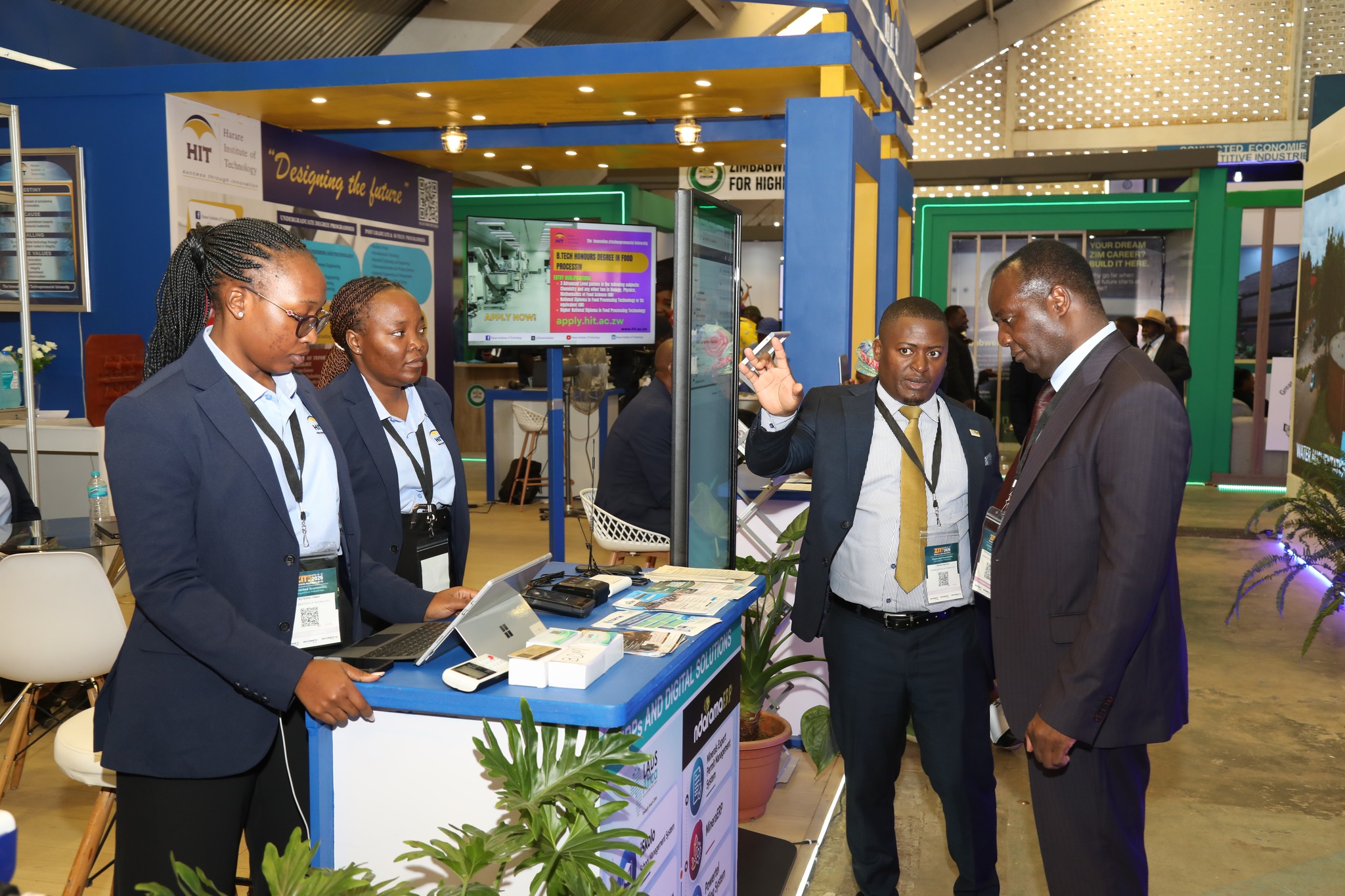
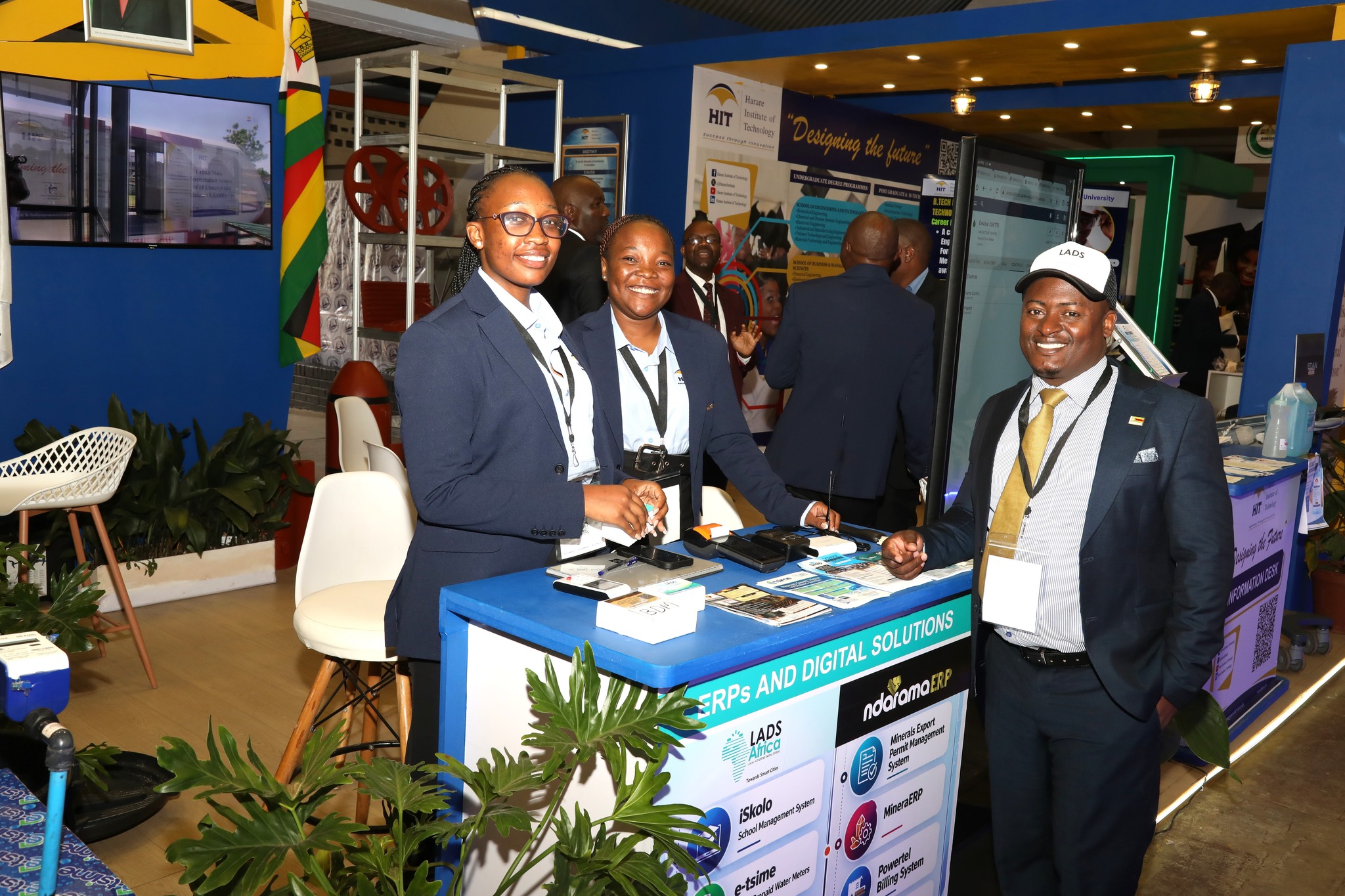
The result speaks for itself. LADS has now been deployed in over 70 local authorities across Zimbabwe. Cities such as Mutare, Masvingo, Kwekwe and Chinhoyi Municipality and Karoi Town Council [U3] are reporting measurable improvements in revenue collection and significant reductions in financial leakages. The system’s modular design, allowing councils to adopt only the components they need, has made it adaptable to the diverse capacities and priorities of different municipalities. Modules such as Instipark for smart parking management, e-Musika for seamless revenue collection from vendors, e-Tsime for digital water meter reading, and e-business licensing for billing and receipting have turned abstract promises of digital transformation into a lived municipal reality.
Technology with a Social Mission
What makes LADS Africa’s story compelling is not just its technical sophistication but its social purpose. The system was designed in direct response to real failures in public governance, the double allocation of residential stands, the maladministration of public funds, the collapse of inter-departmental data integrity, and the central government’s inability to consolidate meaningful national reporting from its local authorities. These are not abstract inefficiencies. They are the daily frustrations of ordinary Zimbabweans who pay rates and receive unreliable services in return.
LADS attacks these failures directly. By creating a unified platform that links every municipal department, it eliminates the update anomalies that breed confusion and distrust. By enabling the national government to monitor council performance in real time, it creates a layer of accountability that imported systems never could. By making the platform available in local currency and at a fraction of the foreign currency costs previously imposed by outside vendors, it frees up resources that councils can redirect to service delivery.
In parallel, the company has been developing AI-driven solutions and smart infrastructure, chatbots, intelligent water management systems, and automated parking, which signal an ambition reaching well beyond Zimbabwe’s borders. The name Ndarama Tech Agency, adopted alongside the LADS Africa brand, speaks directly to this broader continental vision. Ndarama, meaning ‘treasure’ or ‘wealth’ in Shona, frames the company’s work not merely as a software business but as a contribution to Africa’s shared digital wealth.
Independence, Without Forgetting the Roots
Graduating from the HIT Innovation Hub does not mean leaving behind what was built there. Tererai T. Maposa, founder and CEO of LADS Africa, has been clear on this point: the move to independent premises is not a departure from the company’s roots but a natural outgrowth of them. The innovation culture, the entrepreneurial discipline, the rigour of building solutions that work in the real conditions of Zimbabwean governance, all of that was forged inside the Hub and travels with the company into its next chapter.
What independent premises now offer is capacity: dedicated workspaces for product development, room for a growing team, the operational flexibility to take on larger contracts, and the institutional presence that signals credibility to new clients across the continent. The company is also formalising its governance structures, establishing an independent Board of Directors to provide strategic oversight and prepare the business for the next stage of growth. The long-term ambition, a listing on the Victoria Falls Stock Exchange, is not a distant dream but a clearly articulated destination on a roadmap that begins with exactly this kind of structural maturity.
The HIT Mandate, Made Manifest
In the story of LADS Africa/Ndarama Tech Agency, the Harare Institute of Technology can see its own mandate reflected in living form. HIT exists to develop, incubate, transfer, and commercialise technology for Zimbabwe’s rapid industrialisation. Each of those four verbs describes a stage in LADS Africa’s journey: an idea developed within HIT’s intellectual ecosystem, incubated under its institutional care, transferred to the market through its networks, and now being commercialised as a going concern with real revenues, real clients, and real impact.
Zimbabwe’s innovation hubs have been praised for reducing the country’s import bill, for building confidence in domestic manufacturing and technology, and for advancing the ‘Nyika Inovakwa Nevene Vayo’ philosophy, the idea that the nation must be built by its own people. LADS Africa/Ndarama Tech Agency is that philosophy made manifest: a company conceived by Zimbabweans, built for Zimbabwe’s specific challenges, and now preparing to carry its solutions across Africa.
The graduation of LADS Africa from the HIT Innovation Hub is, in the truest sense, a beginning. The Hub did its job. Now the company does its own.