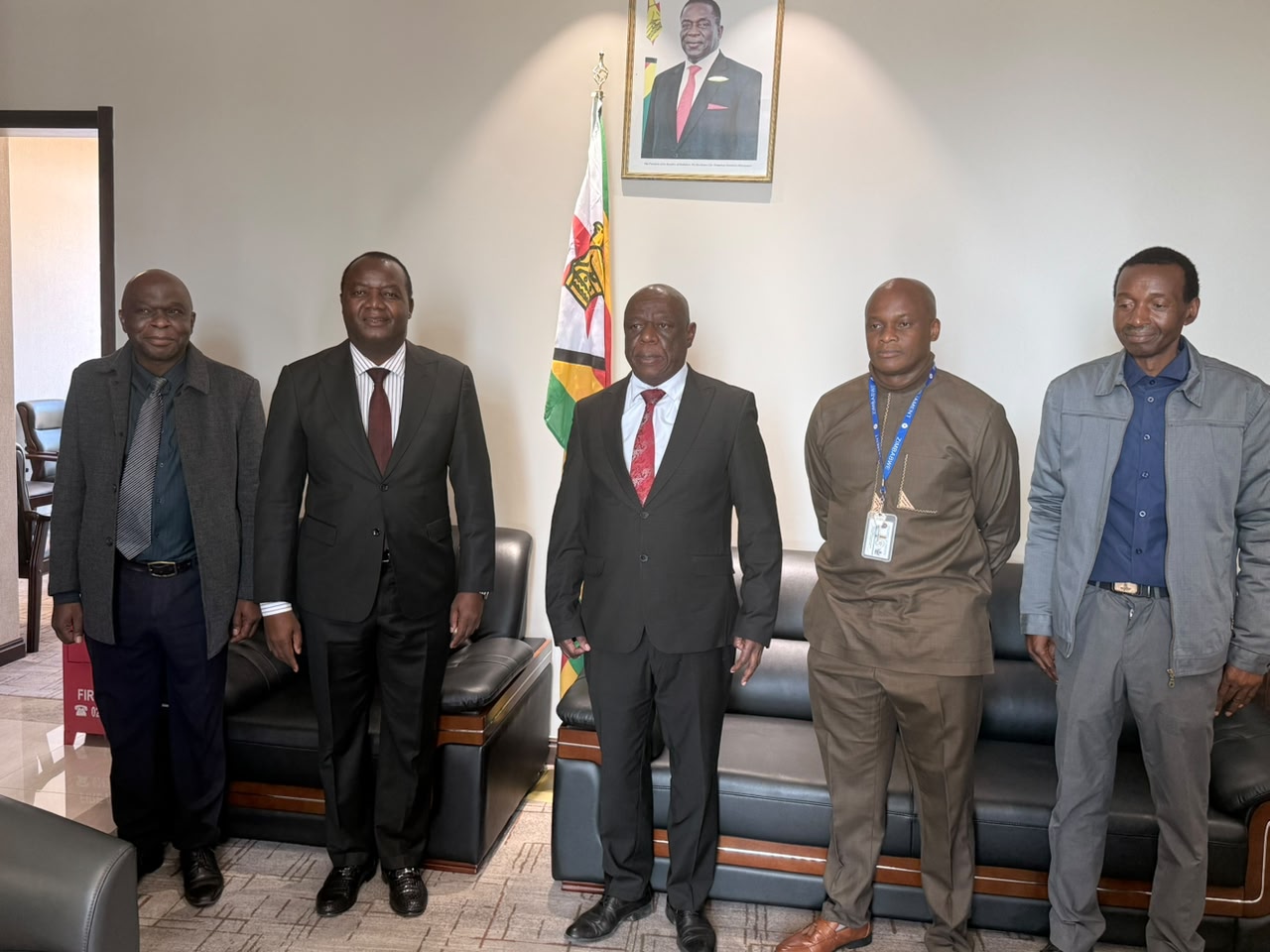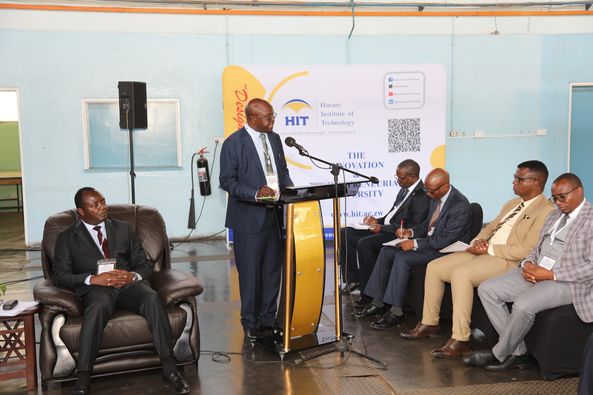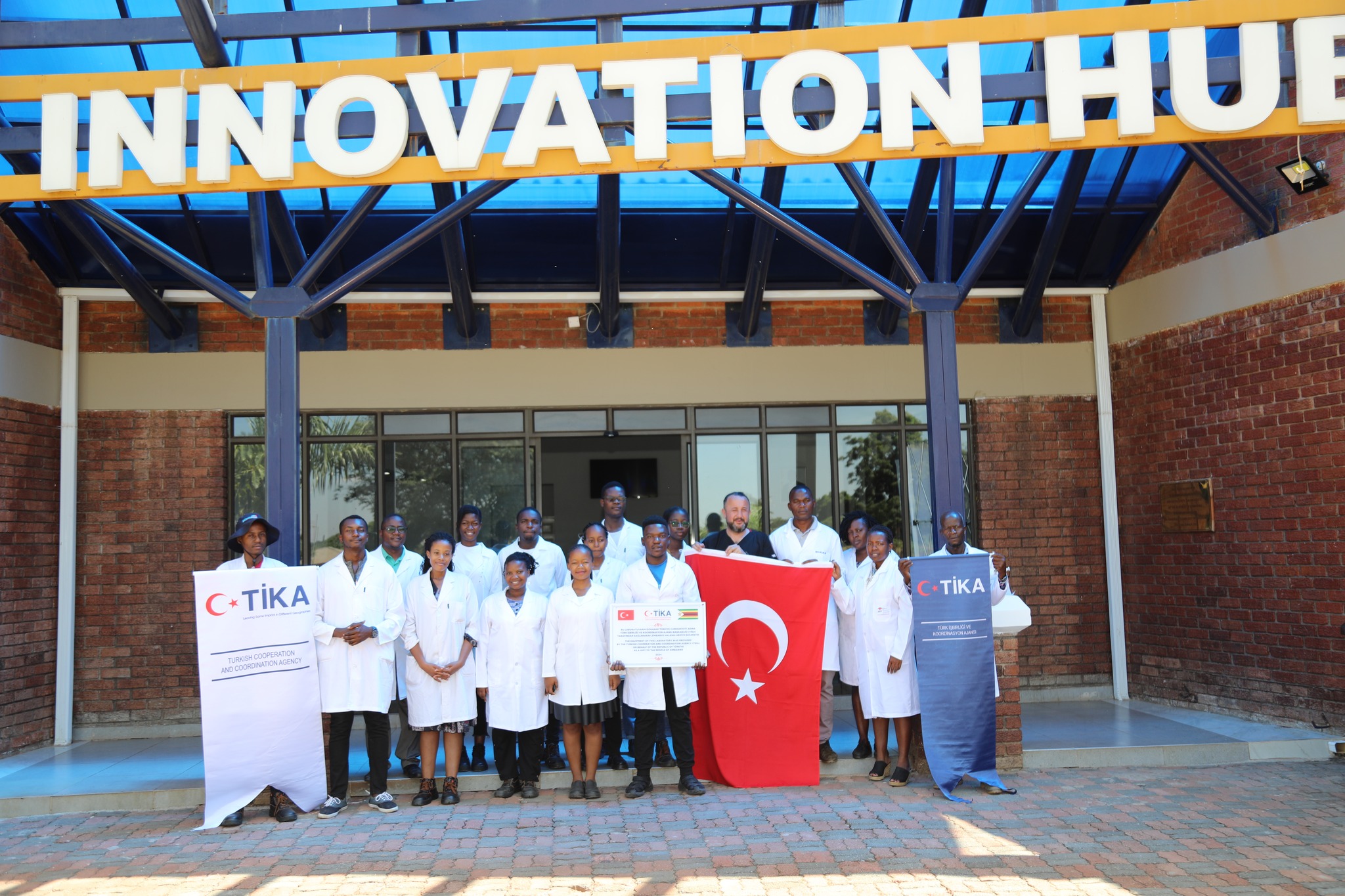

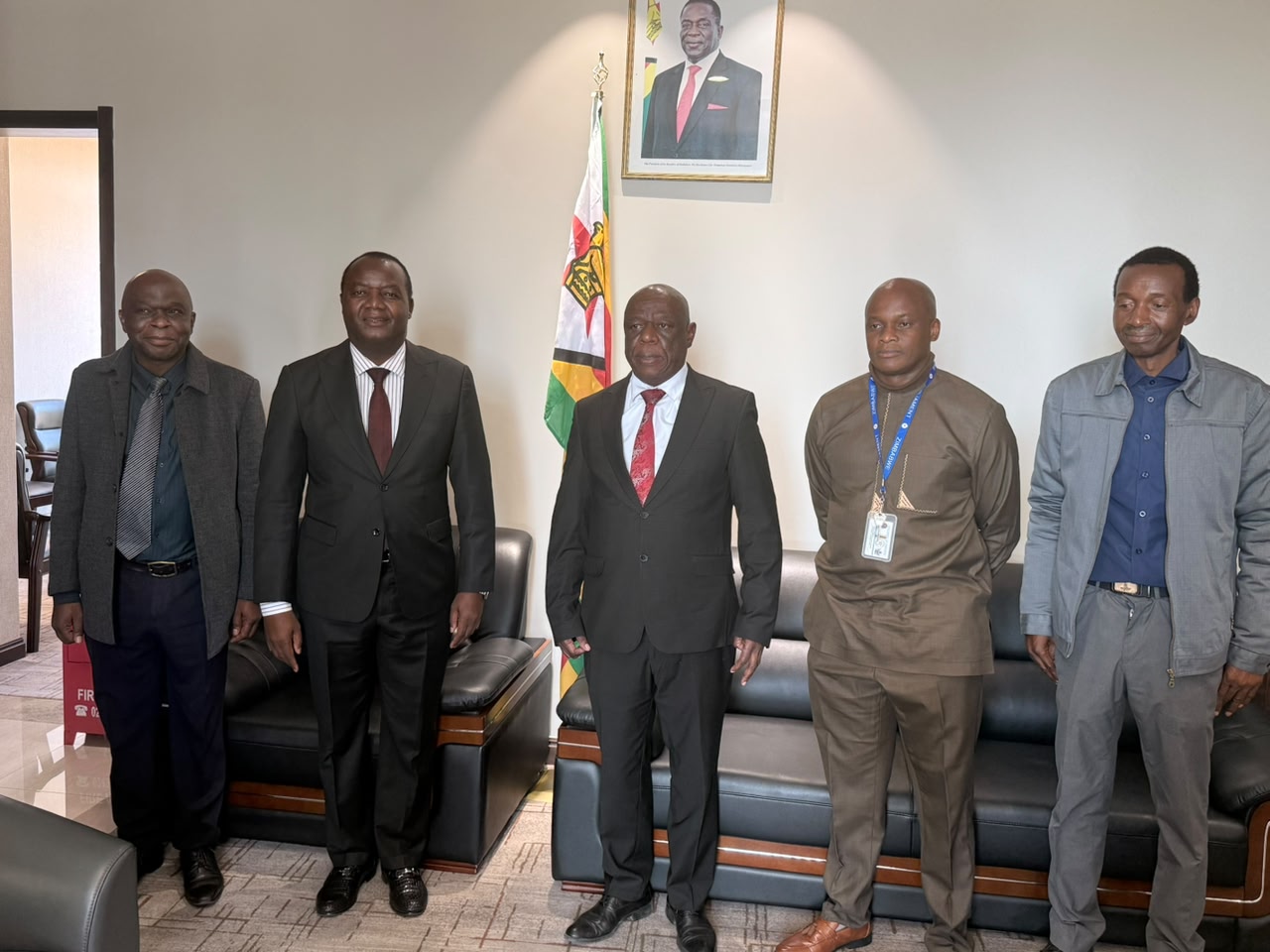
The Vice Chancellor of the Harare Institute of Technology (HIT), Professor Engineer Quinton Kanhukamwe, toured the new Parliament Building in Mount Hampden, where he was received by the Clerk of Parliament, Mr Kennedy Chokuda.
The visit provided an opportunity for the Vice Chancellor and his delegation, comprising the Pro Vice Chancellors, University Architects, senior managers from the Works, Infrastructure, and Estates, as well as the Communications, Advancement and International Relations Departments, to appreciate the architectural excellence, innovative design, and high-quality finishes that characterise one of Zimbabwe’s most iconic public infrastructure projects. During the guided tour, Professor Kanhukamwe visited key sections of the facility, including the parliamentary chambers, which were in session and acknowledged by the Speaker of Parliament; committee rooms; administrative offices; and public engagement spaces.
Speaking to the Clerk of Parliament, Professor Kanhukamwe commended the structure’s remarkable design and artistry, describing it as a symbol of Zimbabwe’s aspirations for modernity, excellence, and sustainable development. He noted that the building serves as an important benchmark for architecture, engineering, construction technology, and innovation in the country.
He further noted that HIT, as a creature of Parliament, remains alive to the mandate it was given at its birth in 2005, namely to develop, incubate, transfer and commercialise technology for rapid national industrialisation. He also highlighted some of the commercialised research, development and innovation outputs that have been deployed across various sectors of the economy.
Mr Chokuda welcomed the Vice Chancellor and his team. He expressed Parliament’s appreciation for the growing collaboration between Parliament and the Harare Institute of Technology, particularly in the area of Artificial Intelligence (AI). He acknowledged HIT’s ongoing contributions to the Parliamentary Committee on the Future. He requested that HIT also work with the Portfolio Committee on Health and the Portfolio Committee on Information Communication Technology (ICT) to provide AI-driven solutions.
The Clerk highlighted the importance of Artificial Intelligence in strengthening parliamentary processes, improving access to information, enhancing research capabilities, and supporting evidence-based decision-making by Members of Parliament and parliamentary staff. He commended HIT for its efforts to promote AI awareness and capacity building within Parliament through both in-person engagements and online platforms.
Mr Chokuda further emphasised the need to leverage Artificial Intelligence to develop local solutions to national challenges, generate knowledge products, and produce policy and research papers to support Parliament’s work and national development. He noted that the partnership with HIT aligns with Parliament’s vision of embracing emerging technologies to improve efficiency, innovation, and service delivery. He undertook to arrange a familiarisation visit to HIT for some members of parliamentary portfolio committees.
The Vice Chancellor reaffirmed HIT’s commitment to supporting Parliament’s digital transformation agenda and promoting responsible AI adoption across various sectors. He underscored the University’s role in advancing innovation, research, and the development of home-grown technological solutions that address Zimbabwe’s developmental priorities.
The tour also provided an opportunity for discussions on future collaboration in areas such as AI-driven research, digital governance, innovation ecosystems, and capacity development for Members of Parliament and parliamentary staff.