
A landmark lecture at HIT just flipped the script on financial literacy,
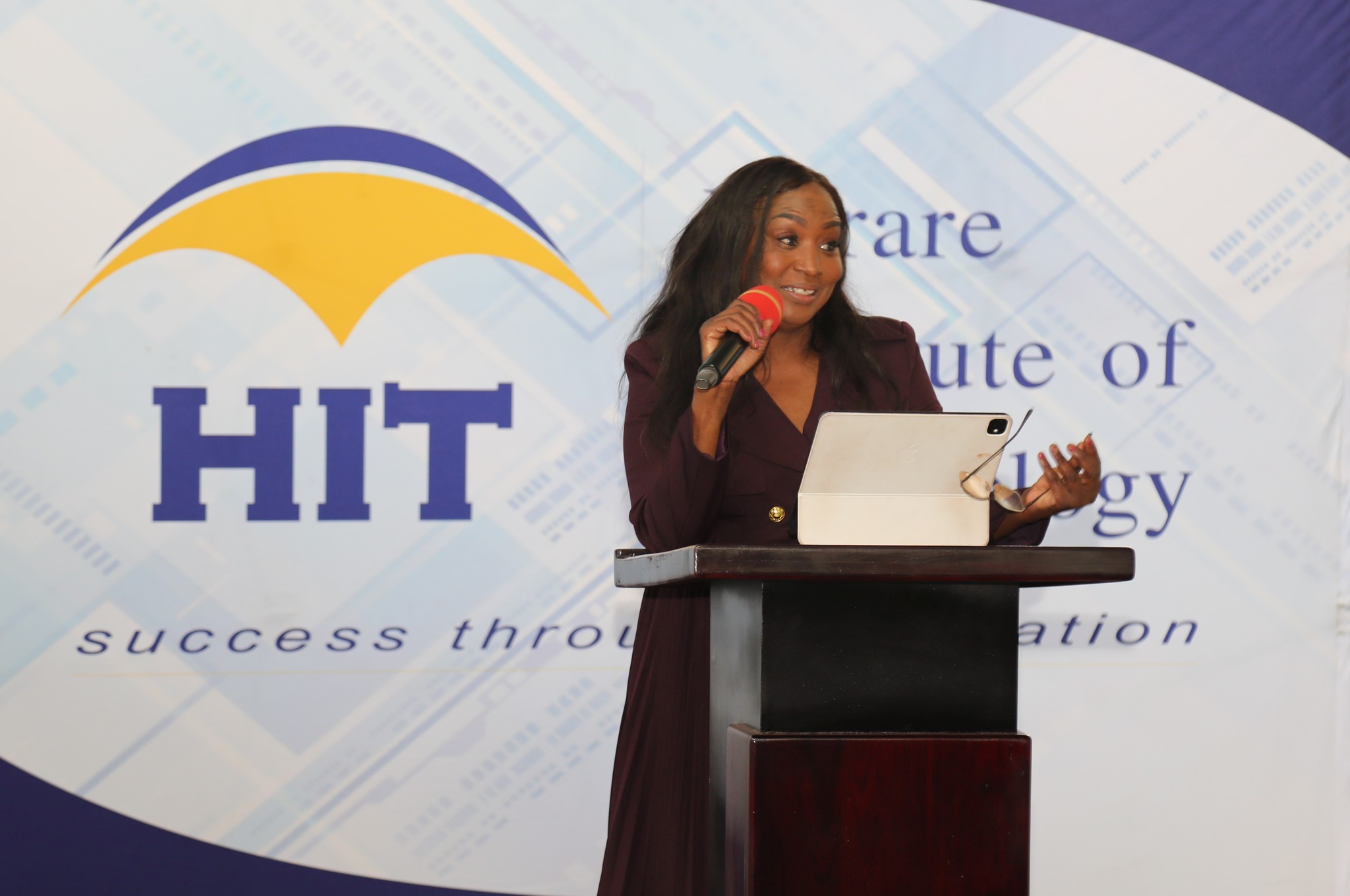
There’s a moment in every great lecture when the energy in the room shifts. When people stop scrolling, sit up a little straighter, and start listening with their whole selves. That moment happened on Wednesday, 18 March 2026, inside the Engineering Hall at the Harare Institute of Technology (HIT), and it was sparked by one woman and one powerful idea.
Dr Grace Taruvinga, a futurist, exponential strategist, and Chairperson of the HIT Board, took the stage not to deliver a standard talk about saving and budgeting. She came to challenge the very way a generation of technopreneurs thinks about money.
The occasion was Global Money Week 2026, hosted by HIT’s Technopreneurship Development Centre (TDC). The theme: “Smart Money Talks: Open, Honest, and Practical Conversations About Money.” But what unfolded was far more than a conversation. It was a mindset reset.
From Linear to Exponential – The Big Idea
Dr Taruvinga’s framework, “Exponential Money: From Linear Ledgers to Global Symbiosis,” starts with a provocative premise: most of us have been taught to think about money in straight lines. Earn. Save. Spend. Repeat. But the world we’re stepping into, one driven by blockchain, digital platforms, mobile finance, and decentralised systems, doesn’t move in straight lines.
It moves in curves. Steep ones.
“Understanding how money works in the digital age is essential for building sustainable wealth and impactful ventures,” she told the packed hall. And the audience, students, faculty, and aspiring entrepreneurs, leaned in.
She walked them through history’s hard lessons: the 2008 global financial crisis, Zimbabwe’s own economic turbulence, and the resilience those chapters demanded. Then she pivoted to possibility, the tools, platforms, and borderless financial systems that today’s generation can leverage in ways no previous generation could.
Five Layers. One Blueprint.
The lecture introduced a layered framework for financial growth that met students exactly where they are. At the personal level, it’s about self-awareness, recognising your own cognitive biases around money and making more intentional choices. At the peer level, it’s about transforming the traditional savings group into a digitally empowered collaborative engine. Moving up, the intergenerational layer bridges inherited financial wisdom with modern high-yield opportunities. The global layer opens the door to borderless finance and digital currencies. And at the institutional level, students are encouraged to prepare for the coming era of decentralised organisations and programmable money.
It’s a blueprint that doesn’t ask students to abandon where they come from. It asks them to build on it boldly.
Introducing the HIT Money Node
Perhaps the most exciting moment came when Dr. Taruvinga introduced the HIT Money Node: A Cognitive Solvency Lab, a live initiative challenging students to put the day’s insights into immediate action.
Students were tasked with conducting personal financial self-assessments, starting honest money conversations in their homes and communities, designing collaborative financial models, and exploring global opportunities through digital tools. No waiting. No theory without practice. Just students empowered to start now.
A Room That Came Alive
What made the day truly memorable wasn’t just what was said from the stage; it was what happened in the seats. Students pushed back, asked hard questions, and shared their own financial realities with an honesty that the TDC’s Thabani Dundu described as remarkable.
“What stood out was the level of student engagement and their willingness to confront real financial challenges,” said Dundu. “At the Technopreneurship Development Centre, we are committed to driving innovation and wealth creation by equipping students with both technopreneurial skills and financial literacy.”
The Future Belongs to the Financially Fluent
Dr Taruvinga closed with a message that lingered long after the applause faded: financial empowerment starts with awareness, deepens through discipline, and accelerates when you dare to think beyond the conventional.
At HIT, that courage is being cultivated deliberately, lecture by lecture, conversation by conversation. Because the next generation of African technopreneurs won’t just be technically brilliant, they’ll be financially unstoppable. The future? They’re already building it.