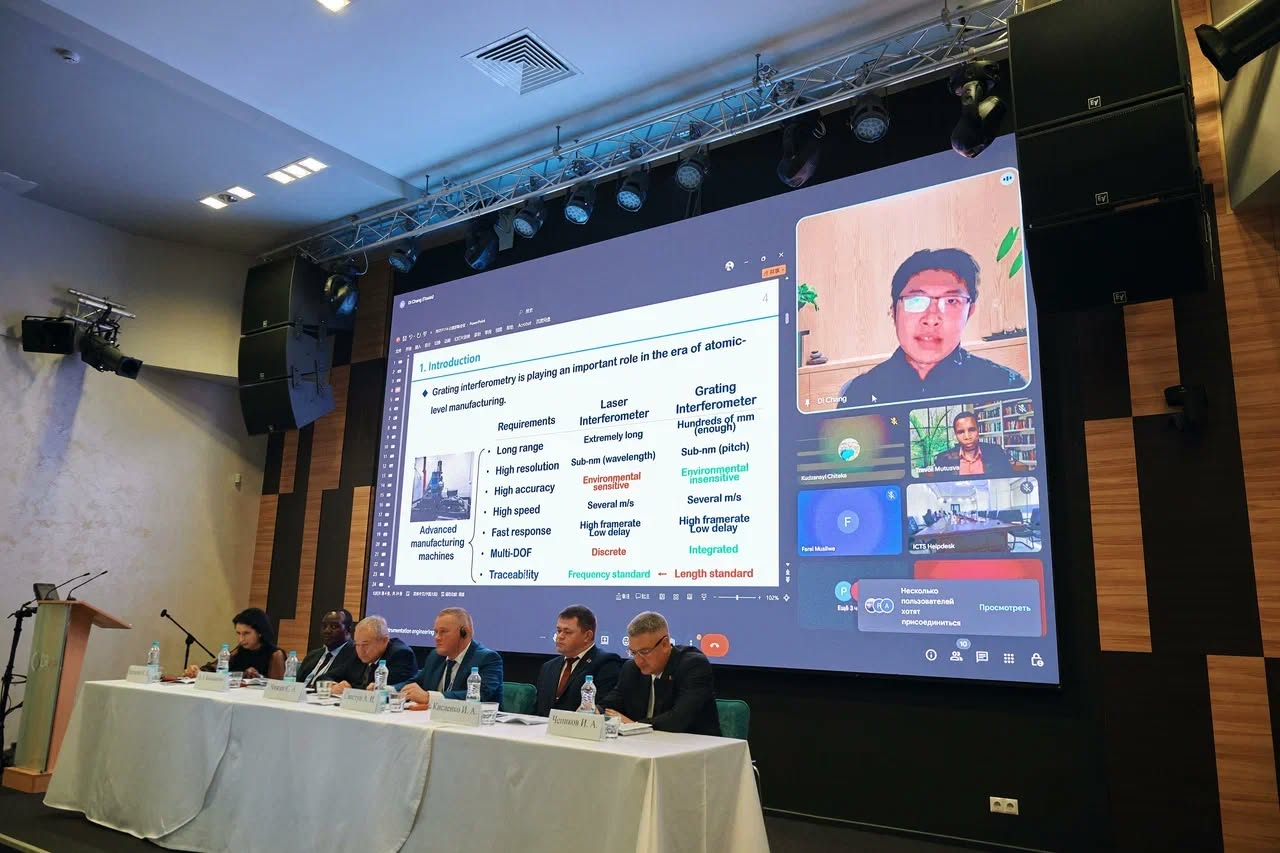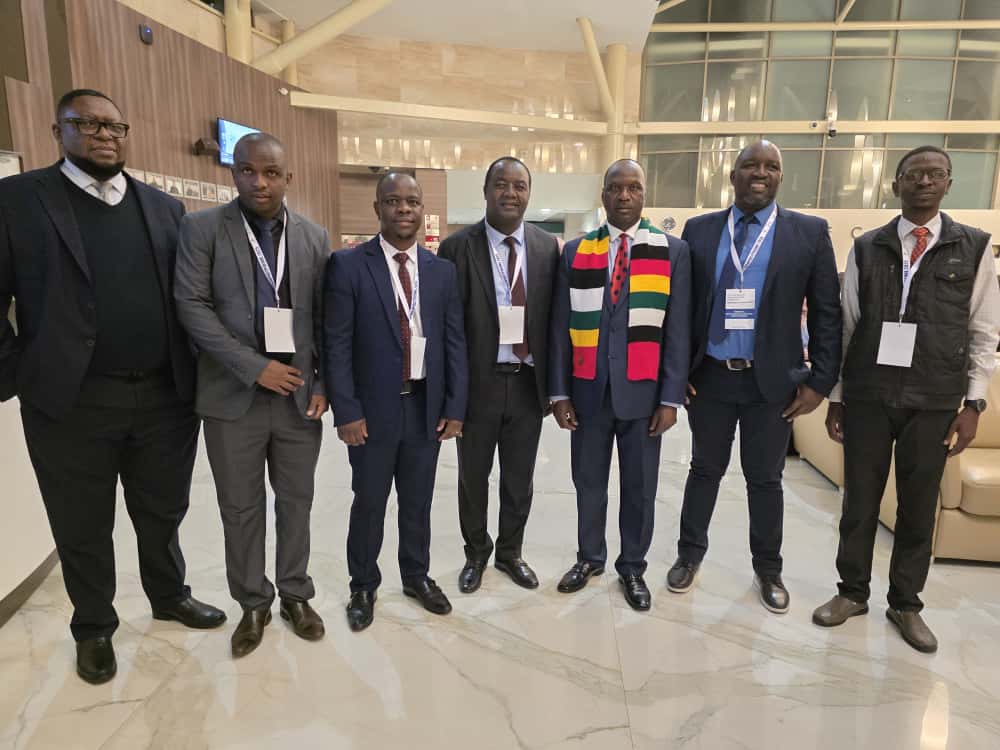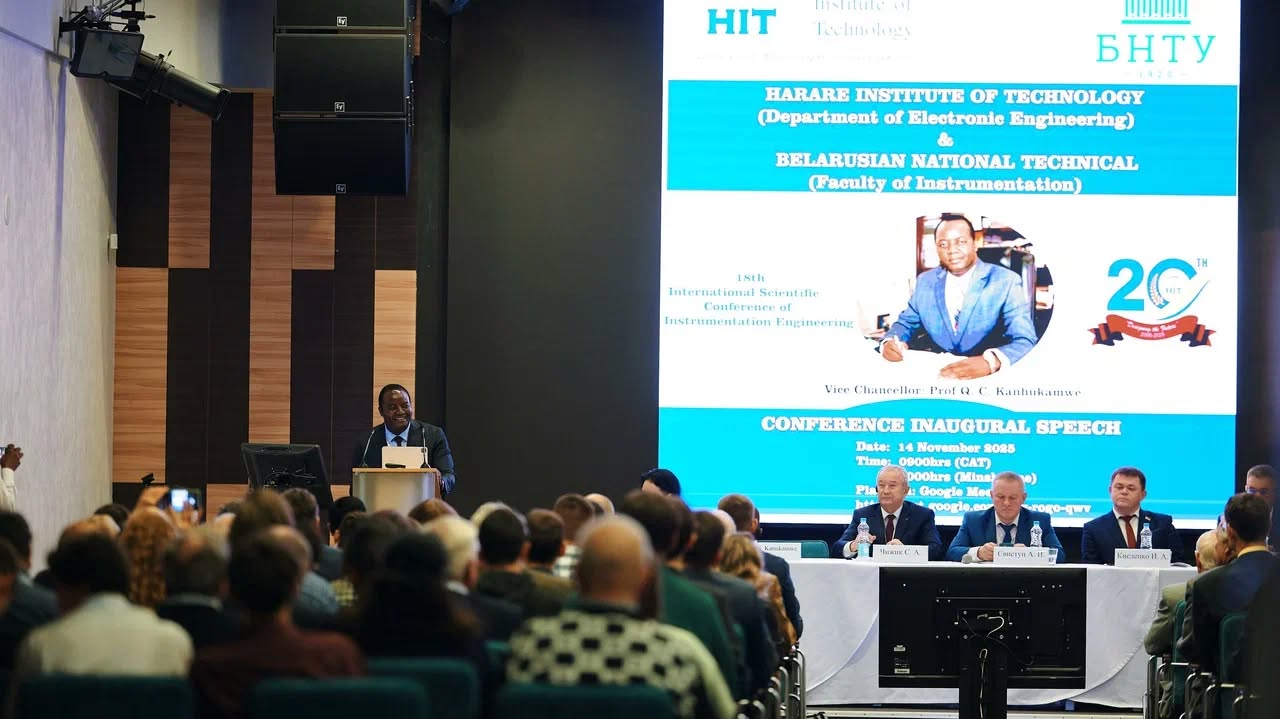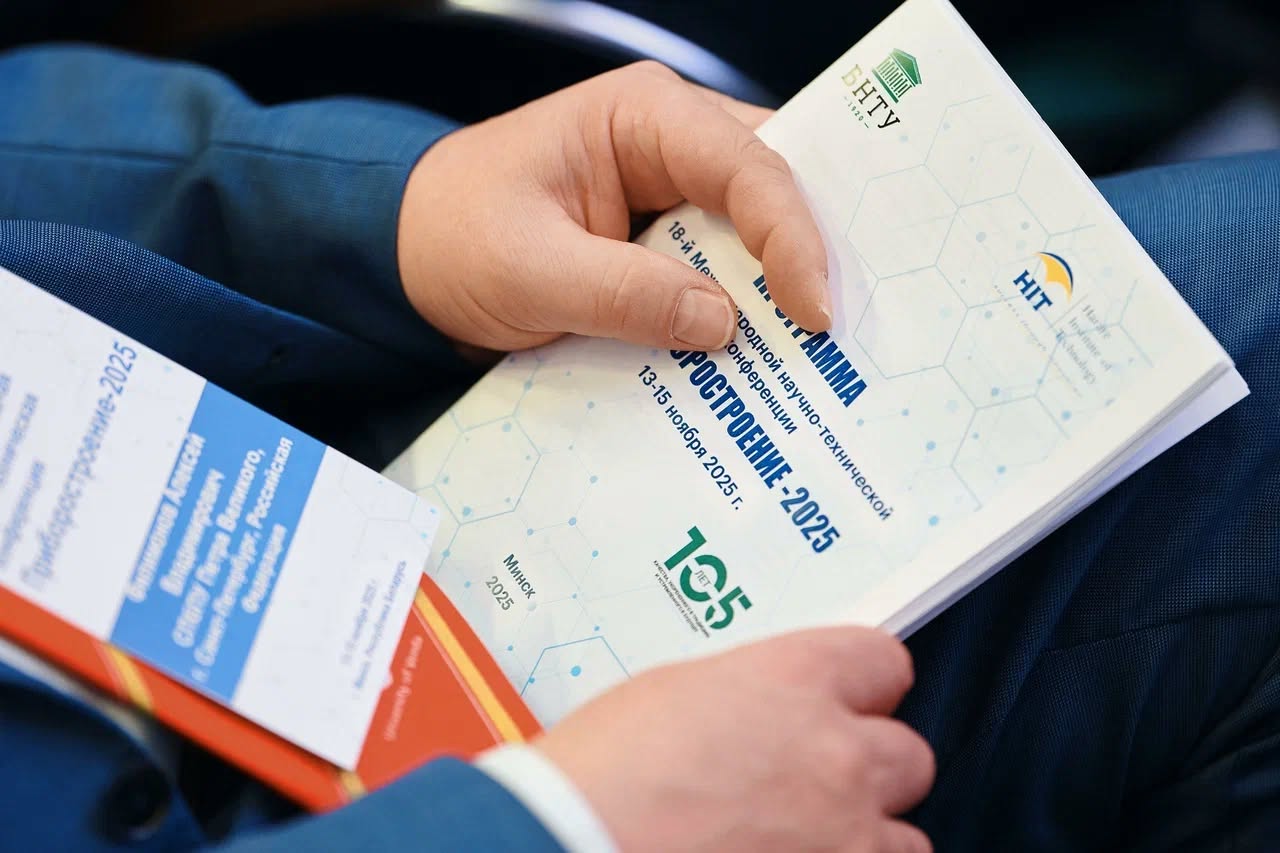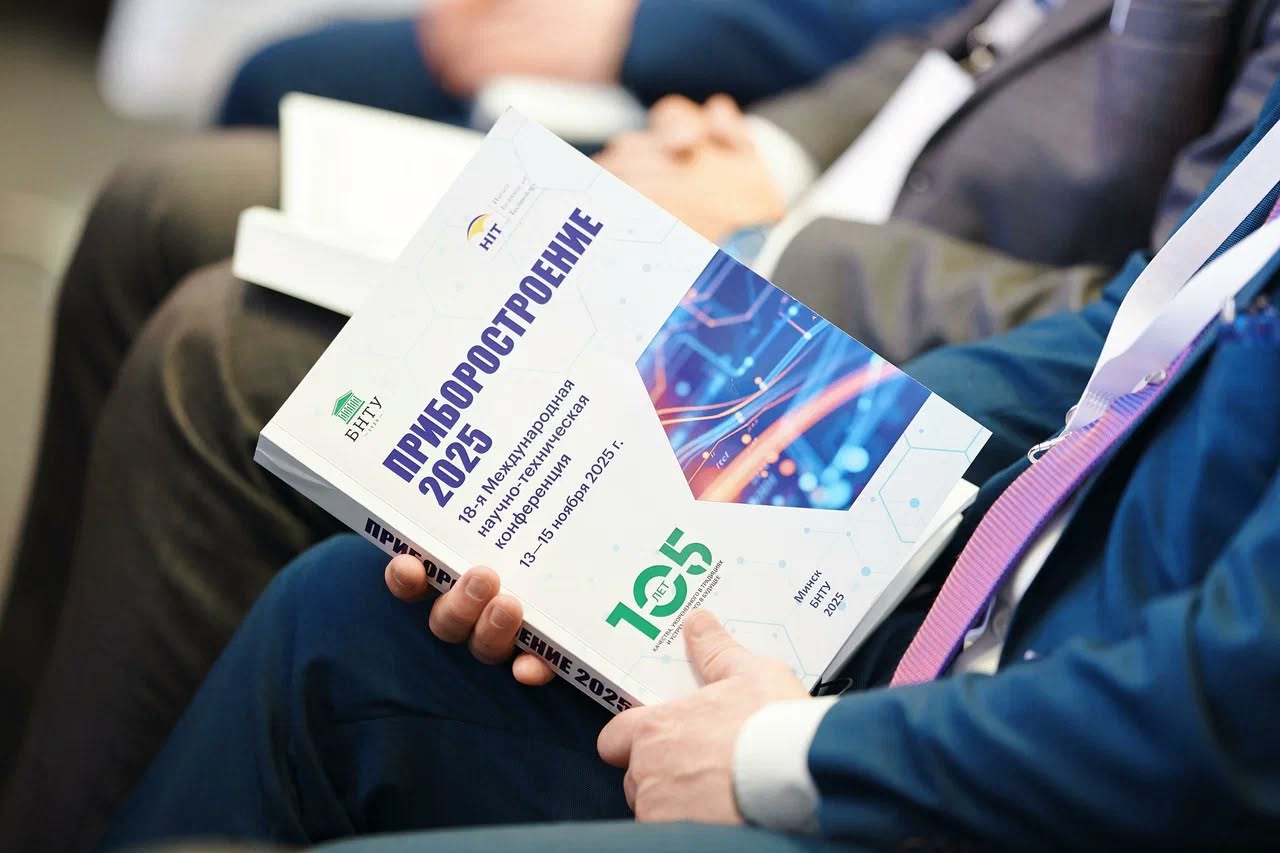

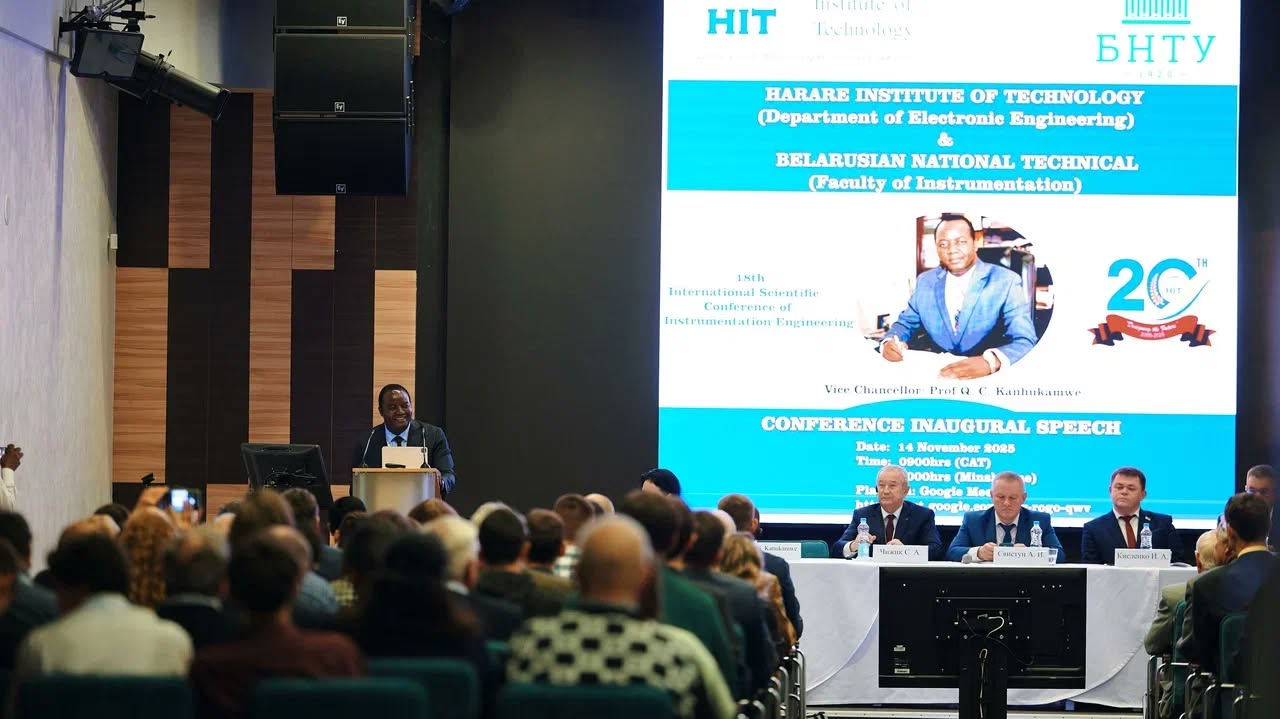
The Harare Institute of Technology (HIT) and Belarusian National Technical University (BNTU) successfully co-hosted the 18th International Scientific Conference on Instrumentation Engineering (ISCIE-2025) in Minsk from November 13-15, 2025. The conference was a significant milestone in international academic collaboration and technological exchange between the two institutions.
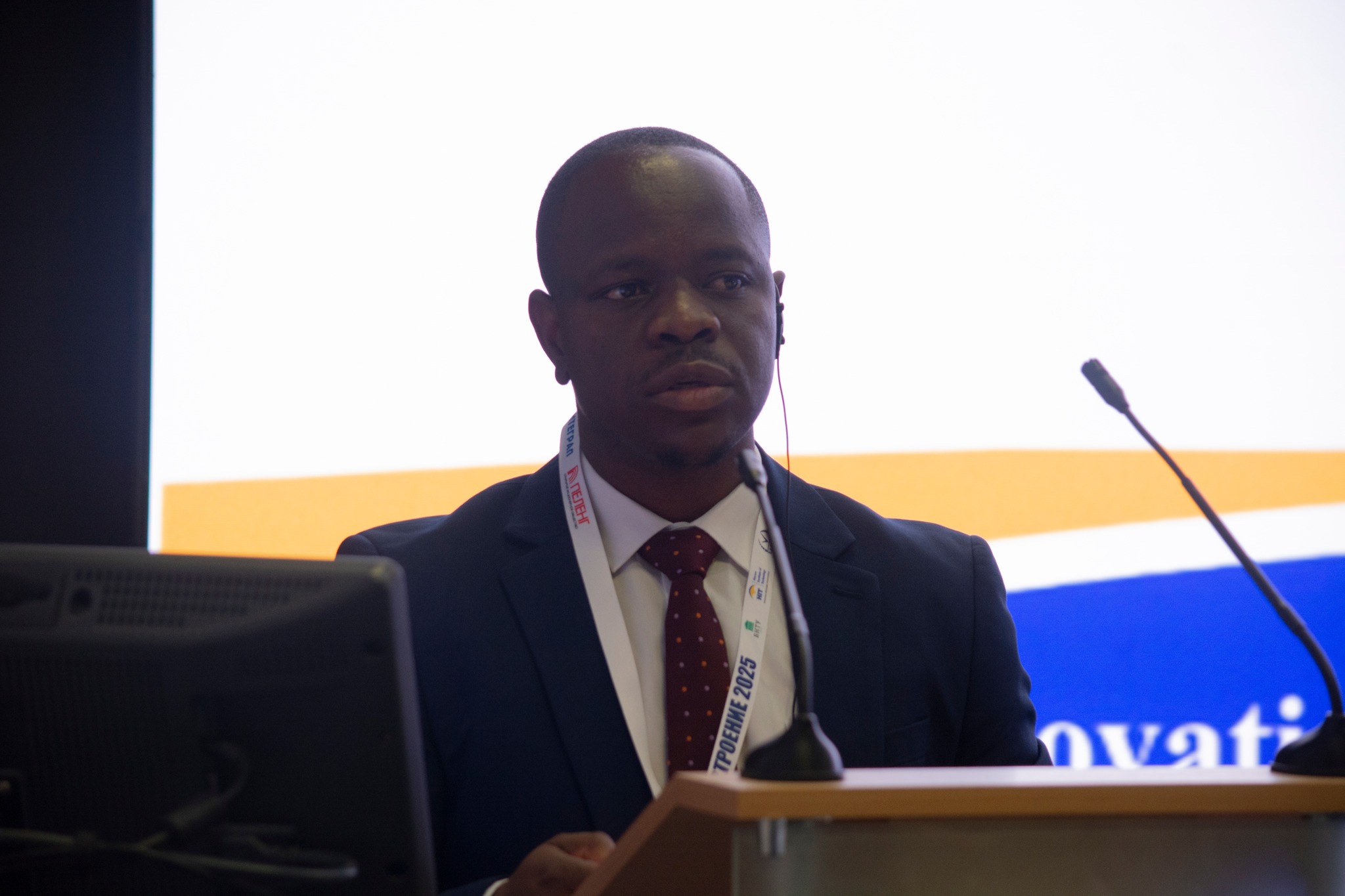
The high-level HIT delegation was led by Vice Chancellor Professor Engineer Quinton C. Kanhukamwe, who set the strategic tone for the conference in his inaugural address, declaring, “This gathering is jointly hosted by the Harare Institute of Technology and our valued partners at the Belarusian National Technical University. Together, we celebrate the Minsk-Harare bridge, an enduring model of purposeful global collaboration, rooted in shared values, innovation, and industrial transformation.”
Professor Kanhukamwe was accompanied by HIT’s Pro-Vice Chancellor for Research, Innovation and Commercialisation, Professor Jephias Gwamuri and a team from the Electronic Engineering Department, comprising Eng. P.B. Musiiwa, Eng. D.T. Makusha, Eng. B.K. Chimonyo, and Eng. M.C. Rushambwa.
The Vice Chancellor outlined the concrete pillars of cooperation, emphasising that these initiatives are interconnected pathways toward sovereign, innovation-driven development. He also highlighted several strategic collaborations, including the Tram Project for sustainable urban mobility, joint research in medical devices, security systems, precision measurement instruments, mineral beneficiation, and foundry technology.
The conference featured six plenary sessions exploring cutting-edge engineering domains, with HIT playing a pivotal role in session 6, “Shaping Industry 5.0,” chaired by Professor Gwamuri. This session proved exceptionally vibrant, featuring 47 presentations that examined the convergence of intelligent automation, digital communication, and advanced electronics for sustainable industrial development.
HIT’s Electronic Engineering department demonstrated remarkable research output, presenting multiple groundbreaking papers, including “The Silicon Shield: A Hardware-Anchored Architecture for Next-Generation Cyber Resilience” by Professor Gwamuri, “An Investigation into The Power-Performance Trade-Off In Memristor-Augmented Sense Amplifiers” by Eng. Musiiwa, and “Design and Evaluation of a GPS-GSM Based IOT Tracking Device” by Eng. Makusha.
In his closing remarks, the Vice Chancellor reinforced the strategic alignment between the two institutions, noting that “Zimbabwe’s Education 5.0 model, anchored in innovation, industrialisation, and impact, resonates deeply with BNTU’s University 3.0 framework, which integrates higher education with national production systems. Together, they form a blueprint for universities that do not merely transmit knowledge, but actively shape industries, societies, and futures.”
The conference culminated in several strategic outcomes, including plans for HIT to host a reciprocal conference in Harare and the establishment of concrete collaborations in aerospace technology, medical device manufacturing, and urban transportation systems. The event was honoured by the presence of Zimbabwe’s Ambassador to Belarus, His Excellency Ignatius Graham Mudzimba, underscoring the diplomatic significance of this growing technological partnership.
This collaboration directly supports HIT’s transformative agenda to elevate its Electronic Engineering Department into an independent faculty, while advancing Zimbabwe’s Vision 2030 through practical technology development, incubation, transfer and commercialisation through industrial cooperation aligned with the national Education 5.0 doctrine, National Development Strategy 2 and Vision 2030.