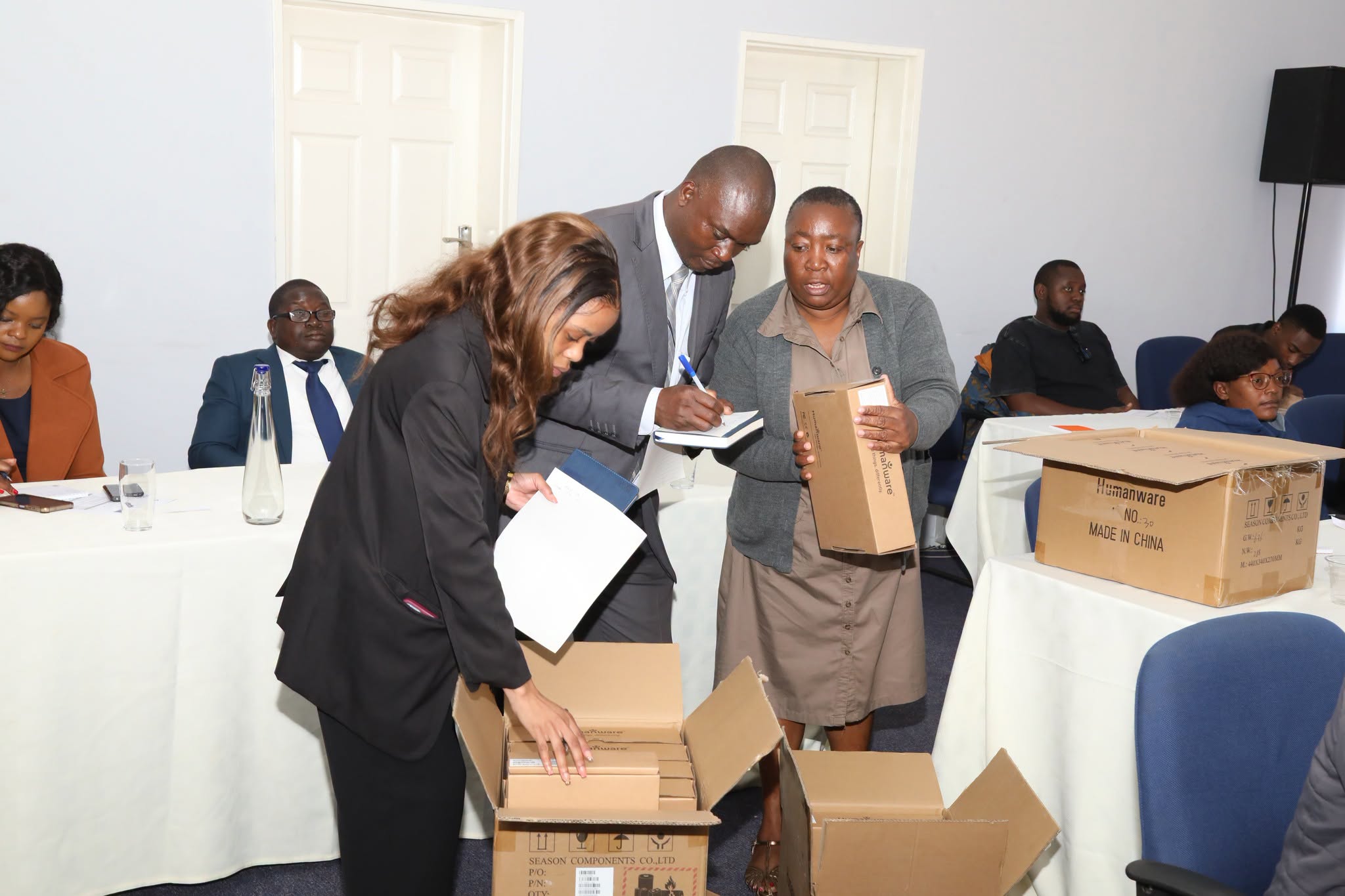
There are moments in the life of an institution that quietly announce something significant has shifted. The 29th and 30th of June 2026 at the Harare Institute of Technology were exactly that kind of moment.
For two days, the HIT Innovation Hub stopped being just a hub of prototypes and start-up pitches and became the gathering place for a different kind of innovation conversation, one about knowledge, dignity, and what a university library owes every single student who walks through its doors. Delegates from more than 22 state universities across Zimbabwe converged on HIT for the Zimbabwe University Libraries Consortium (ZULC) Librarians’ Training on Assistive Technologies, a workshop two years in the making and built to leave a mark that outlasts the week itself.
A Stage Set With Purpose
The HIT Librarian, Mr M. Nhakura, opened proceedings with a line that delegates carried with them long after they left the room: the richest libraries in the world aren’t measured by the number of volumes on their shelves; they are measured by the number of lives they transform.
It wasn’t a ceremonial soundbite. It was a challenge, delivered directly to a room full of librarians and information professionals who had travelled from across the country: go home and build environments where every member of your university community, regardless of ability, can access the full richness of academic knowledge. Where a student with a visual impairment navigates the library catalogue with the same ease as anyone else. Where a student using a wheelchair feels accommodated not as a concession, but as a matter of design.
That’s the kind of opening that makes a room sit up a little straighter.
The People Made the Difference
What set this workshop apart wasn’t only the hardware on the tables; it was who was standing in front of the room. Among the facilitators were visually impaired academics and practitioners of real professional standing, professors and doctors from Zimbabwe and beyond, who have built careers at the highest levels of scholarship without sight.
They weren’t describing assistive technology from the outside looking in. They were teaching tools they use every day to conduct research, supervise doctoral candidates, and engage with the global academy. There’s a meaningful difference between learning how a screen reader technically functions and being taught by someone for whom that screen reader is simply how they work. For many of the delegates in the room, that distinction was the most powerful lesson of the two days.
What Was Actually Taught
The training was hands-on and dense. Day one covered the Dolphin Screen Reader Software, a leading solution for screen reading, magnification, and Braille support, alongside the Braille One Reader, accessible keyboards, the C-Pen, and specialised calculators for visually impaired users. Day two brought the Hark Reader and the Victor Reader Stream 3 into the mix, closing with Mobility Orientation training — a reminder that accessible knowledge isn’t only digital; it’s also physical space, navigated with confidence.
All of it – devices, software, and purpose-built inclusive furniture- was made possible by a USD 220,000 grant secured by ZULC for its member libraries, the product of years of patient advocacy and the kind of professional credibility that doesn’t get built overnight.
Why It Happened at HIT
It wasn’t an accident that this national training found its home at the Harare Institute of Technology. HIT exists to develop, incubate, transfer, and commercialise technology for Zimbabwe’s industrialisation, a science, engineering, and technology (SET) university in mandate and in spirit. Hosting a workshop centred on life-changing assistive technology fits squarely within that identity.
At the centre of it sits the HIT Library, which has deliberately repositioned itself as an ideation centre rather than a quiet room of shelves. Five members of the HIT Library and Information Services team trained alongside their peers from across the country, ensuring the institution is ready to put its share of the new resources to work. And because the workshop was hosted on campus, visiting librarians got to experience, first-hand, what an innovation-oriented library environment actually feels like.
More than Equipment
What was left HIT at the close of this workshop wasn’t just a set of devices and licences. It was a mandate. Every librarian who attended now carries home the knowledge, the skill, and, perhaps most importantly, the conviction that inclusive library service isn’t a nice-to-have. It’s a professional and national obligation.
Zimbabwe’s vision that no citizen should be left behind isn’t fulfilled by policy documents alone. It’s fulfilled the moment a student with a visual impairment sits down at a library workstation and discovers, maybe for the first time, that the world of academic knowledge is fully and unconditionally open to them. The Persons with Disabilities Act provides the legal scaffolding. Education 5.0 provides the philosophy. This workshop provided the practical tools to make it real.
In two days, Zimbabwe’s university libraries moved measurably closer to excellence, and HIT Library is proud to have stood at the centre of it.